

OWASP Top 10 assessment is a structured security audit that tests your WordPress or WooCommerce site against the ten most critical web application risks. For Računalničar, Sebastijan Bandur s.p., this process begins with a written authorization and ends with a prioritized remediation report. This guide covers how to choose a provider, verify credentials, understand the workflow, and navigate the specific legal and technical requirements in Slovenia.
How to Choose a Provider
Selecting a security partner requires looking beyond generic marketing claims. A high-quality provider for WordPress and WooCommerce environments must demonstrate specific expertise in Content Management System (CMS) vulnerabilities. You need a team that understands the unique attack surface of plugins, themes, and the core WordPress architecture. For additional details, review the Storitve Ra unalni ar.
Technical Depth vs. Generalist Scanning
Many providers rely solely on automated scanners. While these tools are useful for initial triage, they often produce high false-positive rates and miss logic flaws. A superior provider combines automated scanning with manual, expert-led penetration testing. At Računalničar, we utilize a hybrid approach. We deploy Kali Linux and WebTesterAI MCP to orchestrate scans, but human experts validate every finding. This ensures that the vulnerabilities reported are real, exploitable, and relevant to your business logic. For additional details, review the AI integracije in MCP.
AI-Native Methodologies
Modern security assessments benefit from AI-driven orchestration. AI agents can execute regression tests and explore complex user flows faster than humans. However, the provider must ensure that AI is used to augment human judgment, not replace it. Look for providers that explicitly state their use of AI for pattern recognition and parallelization, while maintaining human oversight for final validation.
What to Ask Before Committing
Before signing a contract, you must clarify the scope and methodology. Ambiguity in these areas leads to wasted budget and missed vulnerabilities. Ask specific questions that force the provider to define their deliverables.
Scope and Methodology Questions
- Which specific OWASP Top 10 categories are included in the base price?
- Do you test for WordPress-specific vulnerabilities like insecure direct object references (IDOR) in admin panels?
- Is the assessment black-box, gray-box, or white-box?
- How do you handle third-party plugins that are not maintained by the core team?
Deliverable Questions
- Do you provide a re-test after remediation is complete?
- Is the report formatted for auditors and compliance officers?
How to Verify Credentials
Checking Practical Experience
Request case studies that specifically mention WordPress or WooCommerce. A provider that has only tested generic Java or .NET applications may lack the nuance required for PHP-based CMS environments. Ask about their experience with specific plugins you use, such as WooCommerce, Elementor, or RankMath. If they cannot speak to the security implications of these specific tools, they may not be the right fit.
The Assessment Workflow
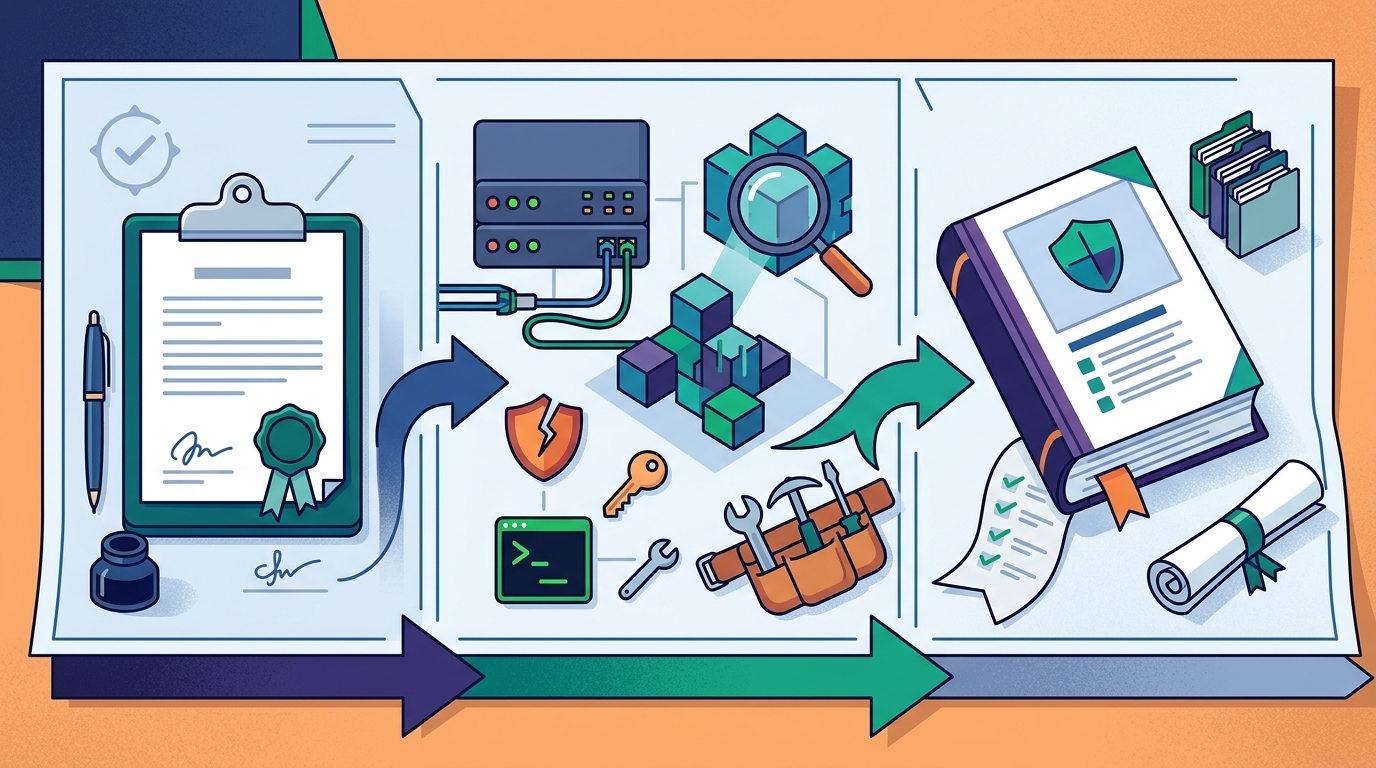
The process for scheduling and executing an OWASP Top 10 assessment follows a strict sequence. This sequence ensures legal compliance and technical thoroughness. The workflow typically spans several weeks, depending on the complexity of the site.
Phase 1: Authorization and Scoping
The process begins with a written authorization. In Slovenia, this is a legal requirement. The provider and the client sign a document that explicitly permits the testing of specific systems. This document defines the scope, including which URLs, IP addresses, and user roles are in-scope. It also defines the out-of-scope items to prevent accidental testing of third-party infrastructure.
Phase 2: Reconnaissance and Scanning
Once authorized, the provider performs reconnaissance. This involves mapping the attack surface, identifying open ports, and enumerating installed plugins and themes. Automated tools like nmap and wpscan are used to gather initial data. For WordPress sites, this phase is critical because it identifies outdated software versions that are known to be vulnerable.
Phase 3: Exploitation and Validation
The core of the assessment is the exploitation phase. The tester attempts to exploit identified vulnerabilities. For OWASP Top 10, this includes testing for Broken Access Control, Cryptographic Failures, Injection, Insecure Design, Security Misconfiguration, Vulnerable and Outdated Components, Identification and Authentication Failures, Software and Data Integrity Failures, and Insufficient Logging and Monitoring. Each finding is validated to ensure it is a true positive.
Phase 4: Reporting and Remediation
Cost Drivers
The cost of an OWASP Top 10 assessment varies based on several factors. Understanding these drivers helps you budget accurately and avoid surprises.
Scope Complexity
The number of pages, plugins, and user roles directly impacts the cost. A simple brochure site with five pages and two plugins is significantly cheaper to test than a complex WooCommerce store with hundreds of products and multiple payment gateways. The more surface area there is, the more time it takes to test thoroughly.
Methodology Depth
Common Mistakes
Organizations often make critical errors when scheduling security assessments. These mistakes can render the assessment useless or even illegal.
Skipping Written Authorization
One of the most common and dangerous mistakes is failing to obtain written authorization. In Slovenia, unauthorized access to an information system is a criminal offense under Article 221 of the Criminal Code (KZ-1). Without a signed authorization document, the tester could be prosecuted, and the client could face legal liability. Always ensure that the authorization is signed before any testing begins.
Narrow Scope Definition
Another common mistake is defining the scope too narrowly. If you only test the homepage, you miss vulnerabilities in the admin panel, user accounts, or API endpoints. Ensure that the scope includes all critical user flows, including checkout, login, and content management.
Assessment vs. Alternatives
There are several alternatives to a full OWASP Top 10 assessment. Understanding the differences helps you choose the right level of protection.
| Method | Depth | Cost | Best For |
|---|---|---|---|
| Automated Scanner | Low | Low | Initial triage, continuous monitoring |
| OWASP Top 10 Assessment | Medium-High | Medium | Compliance, pre-launch, annual audits |
| Full Penetration Test | High | High | Critical systems, high-value targets |
An automated scanner is a good first step, but it should not be the only step. A full penetration test is more comprehensive but also more expensive. The OWASP Top 10 assessment strikes a balance, focusing on the most critical risks without the cost of a full pentest.
WooCommerce Specifics
WooCommerce sites have unique security considerations that generic web applications do not. The e-commerce nature of the site means that it handles sensitive payment data and personal information. This increases the risk and the potential impact of a breach.
Payment Gateway Integration
WooCommerce integrates with various payment gateways. Each integration introduces a new attack surface. The assessment must test the security of these integrations, including how data is transmitted and stored. Providers should have specific experience with popular gateways like Stripe and PayPal.
Plugin Ecosystem
WooCommerce relies heavily on plugins for functionality. Some plugins are poorly maintained or contain known vulnerabilities. The assessment should include a review of all installed plugins, checking for outdated versions and known security issues. Tools like wpscan are particularly useful for this purpose.
Legal Rules and Protections
Security assessments are governed by legal and regulatory frameworks. Understanding these rules is essential for compliance and protection.
Slovenian Criminal Code
In Slovenia, the primary legal framework is the Criminal Code (KZ-1). Article 221 specifically addresses unauthorized access to information systems. This means that any testing must be explicitly authorized in writing. The authorization document should specify the scope, the methods to be used, and the time window for testing.
GDPR Compliance
The General Data Protection Regulation (GDPR) also applies to security assessments. If the assessment involves processing personal data, the provider must comply with GDPR requirements. This includes ensuring that the data is handled securely and that the provider acts as a data processor under a valid contract. Article 28 of the GDPR outlines the requirements for data processing agreements.
Slovenian Local Specifics
Operating in Slovenia introduces specific local considerations. The legal environment, hosting infrastructure, and regulatory requirements are unique to the region.
Local Hosting and Infrastructure
Many Slovenian businesses use local hosting providers. These providers may have specific configurations or security policies that affect the assessment. The provider should be familiar with the local hosting landscape and any specific regulations that apply to data stored within Slovenia.
Regulatory Requirements
Slovenia has specific regulatory requirements for certain industries. For example, financial services and healthcare sectors have additional compliance obligations. The assessment should be tailored to meet these specific requirements, ensuring that the site is not only secure but also compliant with local regulations.
Timing and Scheduling
Timing is a critical factor in the success of a security assessment. Scheduling the assessment at the right time ensures that the results are relevant and actionable.
Pre-Launch and Post-Update
Incident Response
If a security incident has occurred, an immediate assessment is necessary. This post-breach assessment helps identify the root cause of the incident and ensures that the vulnerability is fixed. It also helps in understanding the extent of the breach and any potential data exposure.
Long-Term Results
The value of a security assessment extends beyond the initial report. Over time, the results help build a more secure and resilient digital infrastructure.
Continuous Improvement
Each assessment provides insights into the security posture of the site. By tracking the results over time, you can identify trends and areas for improvement. This continuous improvement cycle helps reduce the overall risk and enhances the security of the site.
Compliance and Trust
Regular assessments help maintain compliance with regulatory requirements and build trust with customers and partners. A secure site is a trustworthy site, which can lead to increased customer confidence and business growth.
Key Takeaways
- Written authorization is a legal requirement in Slovenia under KZ-1 Article 221.
- Choose a provider with specific WordPress and WooCommerce expertise.
- Verify credentials and request case studies relevant to your tech stack.
- The assessment workflow includes authorization, scanning, exploitation, and reporting.
- Cost is driven by scope complexity and methodology depth.
- Common mistakes include skipping authorization and defining a narrow scope.
- WooCommerce sites require specific testing for payment gateways and plugins.
- GDPR compliance is essential when personal data is involved.
Frequently Asked Questions
Is written authorization required for a pentest in Slovenia?
Yes. Under Article 221 of the Slovenian Criminal Code (KZ-1), unauthorized access to an information system is a criminal offense. Therefore, a written authorization document is legally required before any testing begins.
How long does an OWASP Top 10 assessment take?
The duration depends on the complexity of the site. A simple site may take a few days, while a complex WooCommerce store may take several weeks. The provider should provide a timeline during the scoping phase.
What is the difference between a scanner and a pentest?
A scanner is an automated tool that identifies known vulnerabilities. A pentest is a manual, expert-led assessment that explores the system for unknown vulnerabilities and logic flaws. A pentest is more thorough and effective.
Do I need to be present during the assessment?
No, you do not need to be present during the assessment. However, you should be available to answer questions about the system and to provide access to necessary environments.
What happens after the assessment is complete?
Can the assessment be done remotely?
Yes, the assessment can be done remotely. The provider needs access to the system, which can be provided via secure remote access or by granting them credentials.
Conclusion
Scheduling an OWASP Top 10 security assessment for a WordPress or WooCommerce site is a critical step in protecting your digital assets. By choosing the right provider, verifying credentials, and understanding the legal and technical requirements, you can ensure a thorough and compliant assessment. Računalničar, Sebastijan Bandur s.p. offers expert-led security testing with AI-native methodologies, ensuring that your site is secure and resilient. To begin your assessment, start your pentest brief today.