

Managed Server Monitoring for Small Businesses in Slovenia: 2026 Guide
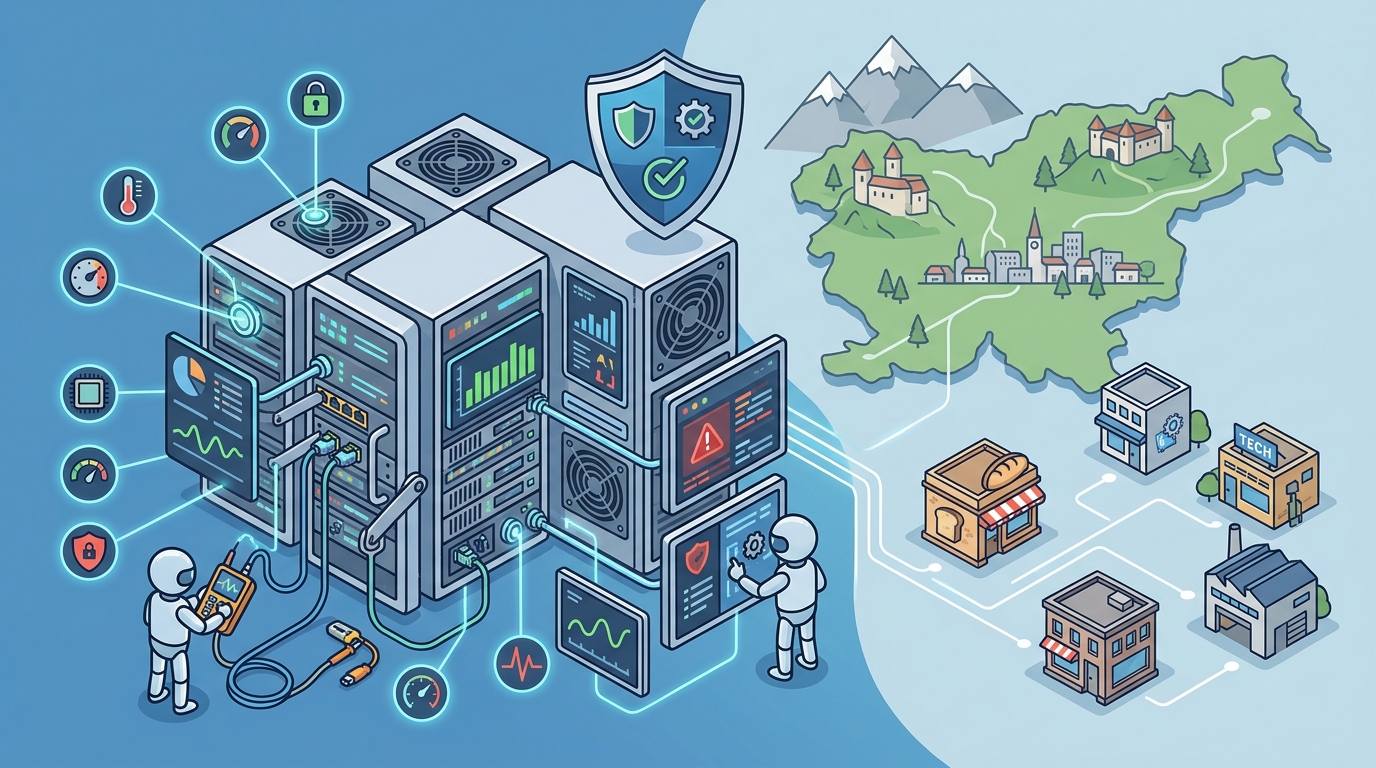
Managed server monitoring is a continuous, automated process that tracks server health, performance, and security in real time. For small businesses in Slovenia, it is the primary defense against downtime, data loss, and security breaches. This guide covers the seven essential monitoring services you need and how to manage your cloud infrastructure effectively. We focus on practical, actionable steps for IT leaders and business owners. For additional details, review the Storitve Ra unalni ar.
7 Essential Monitoring Services
Small businesses often overlook monitoring until a failure occurs. A robust monitoring stack requires seven distinct services. Each service addresses a specific failure mode. Together, they provide a complete view of your digital operations. For additional details, review the AI integracije in MCP.
1. Uptime and Availability Monitoring
Uptime monitoring is a service that checks if your website or application is accessible to users. It pings your server at regular intervals. If the server does not respond, the system triggers an alert. This is the most basic form of monitoring. It ensures your business is open for business. For additional details, review the Ra unalni ar Sebastijan.
2. Performance and Latency Tracking
Performance monitoring tracks how fast your server responds to requests. It measures metrics like Time to First Byte (TTFB) and page load times. Slow performance drives customers away. It also impacts your search engine rankings. You need to monitor these metrics across different geographic locations. For additional details, review the Novice Ra unalni ar.
3. Resource Utilization Monitoring
Resource monitoring tracks the usage of CPU, memory, and disk space. It alerts you when resources reach critical thresholds. High CPU usage can indicate a bug or a DDoS attack. Low disk space can crash your database. This service prevents hardware-level failures.
4. Security and Intrusion Detection
Security monitoring is a service that detects unauthorized access attempts and malicious activity. It analyzes logs for suspicious patterns. It can identify SQL injection attempts or brute-force attacks. This is critical for protecting sensitive customer data. It complements your firewall and antivirus software.
5. Log Management and Analysis
Log management collects and analyzes system, application, and security logs. It centralizes data from multiple sources. This makes it easier to troubleshoot issues. It also helps with compliance and auditing. You can search for specific events quickly.
6. Backup Verification
Backup verification is a service that ensures your backups are actually working. It tests restore processes regularly. A backup that cannot be restored is not a backup. This service gives you confidence in your disaster recovery plan. It is often overlooked but is vital for business continuity.
7. SSL Certificate Expiration Monitoring
SSL monitoring tracks the expiration dates of your security certificates. It alerts you before a certificate expires. An expired certificate causes browser warnings. It breaks secure connections. This simple check prevents a common and avoidable outage.
Cloud Infrastructure Management
Most small businesses in Slovenia now use cloud services. Managing this infrastructure requires a different approach than on-premise servers. You need to understand the shared responsibility model. You are responsible for data and application security. The provider is responsible for the underlying hardware.
Choosing the Right Cloud Provider
Major providers like AWS, Azure, and Google Cloud offer robust monitoring tools. However, they can be complex for small teams. You need to evaluate your specific needs. Consider data residency requirements in the EU. Look for providers with data centers in Europe. This ensures compliance with GDPR and reduces latency for your local customers.
Automating Infrastructure Management
Manual configuration is error-prone and slow. Infrastructure as Code (IaC) tools like Terraform or CloudFormation allow you to define your infrastructure in code. This ensures consistency and repeatability. It also makes it easier to replicate environments. You can spin up a new server in minutes, not days.
Cost Optimization and Monitoring
Cloud costs can spiral out of control if not managed. You need to monitor your spending regularly. Set up budget alerts to notify you when you approach a threshold. Identify unused resources and shut them down. Right-size your instances to match your actual workload. This can save you significant money.
| Monitoring Service | Primary Purpose | Key Metric |
|---|---|---|
| Uptime Monitoring | Ensure accessibility | Availability % |
| Performance Tracking | Measure speed | Latency (ms) |
| Resource Utilization | Prevent hardware failure | CPU/Memory % |
| Security Detection | Identify threats | Alerts/Incidents |
| Log Management | Troubleshoot and audit | Log Volume |
| Backup Verification | Ensure recoverability | Restore Success Rate |
| SSL Monitoring | Maintain trust | Days to Expiration |
Key Takeaways
- Managed server monitoring is a continuous process, not a one-time setup.
- You need seven distinct services for a complete monitoring stack.
- Uptime and performance monitoring are the most critical for customer experience.
- Security monitoring is essential for protecting sensitive data.
- Cloud infrastructure requires a different management approach than on-premise.
- Automate your infrastructure using Infrastructure as Code (IaC).
- Monitor your cloud costs to avoid unexpected bills.
- Regularly test your backups to ensure they are restorable.
Frequently Asked Questions
What is the difference between monitoring and management?
Monitoring is the act of observing and collecting data. Management is the act of taking action based on that data. Monitoring tells you something is wrong. Management fixes it.
How often should I check my server health?
Automated monitoring should check your server every minute or less. Manual checks are not sufficient for 24/7 operations. You need real-time alerts.
Is cloud monitoring more expensive than on-premise?
It depends on your scale. Cloud monitoring often has a lower upfront cost. However, usage-based pricing can lead to higher costs at scale. You need to monitor your usage carefully.
What are the most common causes of server downtime?
The most common causes are resource exhaustion, software bugs, and security attacks. Hardware failure is less common in the cloud. You need to monitor all three categories.
How do I choose a monitoring tool?
Look for a tool that integrates with your existing infrastructure. It should provide clear, actionable alerts. Avoid tools that generate too many false positives.
Can I manage my own monitoring?
Yes, but it requires significant time and expertise. Most small businesses benefit from managed services. These services provide 24/7 coverage and expert support.
Conclusion
Effective server monitoring is not optional for small businesses in Slovenia. It is a critical component of your IT strategy. You need to implement the seven essential monitoring services. You also need to manage your cloud infrastructure with automation and cost control. Računalničar, Sebastijan Bandur s.p. offers comprehensive IT services, including security testing and AI integrations, to help you secure and optimize your digital operations. today to discuss your monitoring needs.